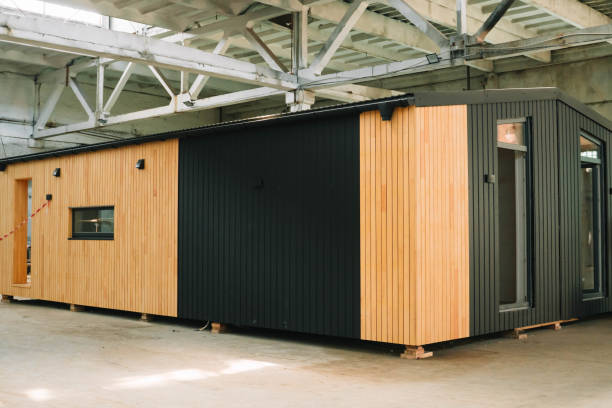
Why Disaster Relief Housing Should Take a Cue from Modular Community Homes

Ever watch those sci-fi movies where after a cataclysmic event, modish homes spring from the ground as if by magic? Yeah, me too. So, why does it seem like in real life, after a disaster, we're stuck with options that look like shoeboxes? Let's dive into why modular community housing could teach disaster relief housing a thing or two.
What's the Deal with Disaster Relief Housing?
Alright, when disaster strikes, speed is key, right? We need shelters, and we need them fast. But does fast have to mean stark, uncomfortable, and, let’s be honest, a bit depressing? I get it; it's about survival, but hear me out. There's room for innovation here. Modular homes, like those snazzy minimalist cubes you’ve seen popping up, they could change the game.
In my experience, simplicity doesn't have to sideline comfort. Modular homes not only pop up quickly but with a dash of thoughtful design, they can feel more like a refuge and less like a last resort.
Modular Community Housing: The Unsung Hero
Now, let's talk about these stars of efficiency. Modular community homes are like LEGO for adults—designed in a factory setting and assembled onsite like a sophisticated puzzle. And here’s the kicker: they are stylish, sustainable, and, best of all, scalable. They can morph from a single unit to an entire thriving community before you can say “modular”.
And guess what? These homes often incorporate green technologies. We’re talking water-saving fixtures, solar panels, and materials that laugh in the face of mold and moisture. Minimalist? Yes. Spartan? Not at all.
It’s a Match! Or Is It?
So, could the sleek efficiency of modular community housing be the blueprint for disaster relief housing? I mean, we’re already halfway there. Both prioritize rapid deployment and cost-effectiveness, but one clearly has the upper edge in livability.
Imagine disaster-struck areas blossoming with compact, eco-friendly homes, complete with modular gardens and communal spaces. It’s not just about surviving; it’s about thriving, post-disaster. And let's face it, anything that can make a cataclysm feel a bit less cataclysmic is a winner in my book.
Why Modular Homes Rock (And Not Just Because They’re Trendy)
- Speedy assembly – think hours, not weeks.
- Customizable designs – because one size does not fit all.
- Eco-friendly – saving the planet one home at a time.
- Cost-effective – more bang for your buck.
- Durability – they can stand up to Mother Nature’s mood swings.
- Scalability – from a cozy nook to a sprawling enclave.
- Community vibes – because neighbors shouldn’t be strangers.
- Stylish – because, let’s face it, we all have a bit of an ego.
Now, if only we could get disaster relief agencies on board. A little less boxy, a little more boutique, perhaps?
Maybe it’s time we stopped treating disaster relief housing as a temporary fix and started thinking about long-term sustainability and comfort. Modular community housing? You might just be the blueprint we’ve been looking for. So, what do you think? Could modular community housing be the future of disaster relief? Or are we dreaming too big? Drop your thoughts below!