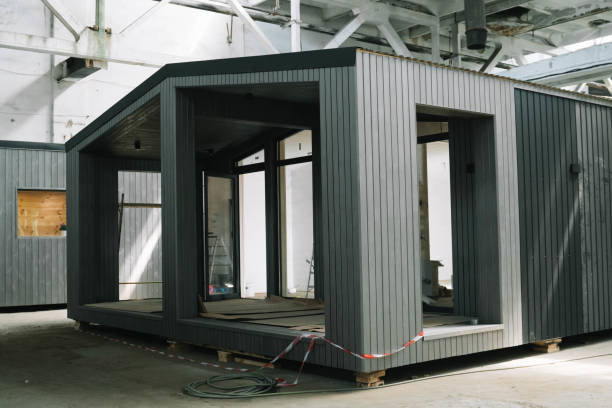
Why 3D Printed Modular Homes Are More Than Just Building Blocks for the Future

Ever think about how we could just print out a house like we print those funny cat T-shirts? Well, gear up, because I’m diving headfirst into the world of 3D printed modular homes and why they’re not just a builder’s fantasy but a concrete step (pun intended) towards sustainable urban living.
Forget Cookie-Cutter Houses – Welcome to the Age of Customization
Remember when customization was picking the color of your kitchen tiles? Ancient history! With 3D printed homes, we’re playing on a whole different field. The level of customization here makes bespoke tailoring look like amateur hour. We're not just building houses; we're crafting habitats tailored to individual needs.
Imagine tweaking your home’s design on a laptop like you're editing a Word doc. Want a sunroom where you can feel like you're outdoors without actually being outdoors? Print it. Need a nook that perfectly fits your oddly shaped heirloom vase? No problem. The flexibility here is mind-blowing.
And here’s the kicker: all these tweaks don’t mean a ballooning budget. In fact, they could reduce costs significantly. How? Less waste, baby. Precision printing means you only use the material you need.
Urban Infill Housing: Squeezing Awesomeness into Tight Spaces
Infill housing isn’t about shoving more into less; it’s about optimizing space creatively. And with 3D printing, we're talking about a level of spatial efficiency that could make a New York studio feel like a mansion. Well, almost.
These aren't your run-of-the-mill construction projects that take months (or years) and disrupt the whole neighborhood. These homes can be printed in a fraction of the time, meaning less noise, less mess, and less headache for everyone involved. Plus, they fit into existing urban landscapes like a dream, making use of lots that traditional building methods would shy away from.
Why This Isn’t Just Another Tech Fad
Now, I know what you’re thinking. “Great, another tech trend that’ll be obsolete by next Tuesday.” But here's why you’re wrong: 3D printed homes aren’t just a trend; they’re a response to real, pressing issues – like urban density and environmental sustainability.
With populations ballooning and cities straining at the seams, we need smart, scalable solutions. Modular housing isn’t just a neat trick; it’s part of the answer to some of our biggest urban challenges.
Why Modular Housing Is The Smarty Pants Of Architecture
- Speedy construction: What takes months can now take days.
- Cost efficiency: Less material waste equals less money waste.
- Customizable: Your home, your rules. Want a slide instead of stairs? You got it.
- Eco-friendly: Less waste production, and often, sustainable materials.
- Space-smart: Perfect for those quirky urban spaces no one else can build on.
- Resilience: Built to withstand Mother Nature’s mood swings.
- Future ready: Adaptable to new technologies and upgrades.
- Portable: Yep, some can be moved. Home is literally where you park it.
And let's not forget, they look ridiculously cool. We’re living in the future, folks!
So, while some might scoff at the idea of living in a 'printed' house, I see a canvas of endless possibilities. It's not just about structures; it's about crafting smarter, more sustainable cities. In my experience, diving into the world of modular housing innovation has been nothing short of exhilarating. It feels like being part of a sci-fi novel, but one that’s written by us and for our future. So, what’s your take? Could you see yourself living in a 3D printed home, or are you still skeptical about this tech? Chime in with your thoughts below.