Do modular cabins offer a practical solution for sustainable tech‑enabled housing?
I’ve spent the last decade turning abstract ideas into working products, and in 2026 I tackled one of the most pressing real estate challenges: delivering affordable, sustainable, tech‑enabled homes at scale. The solution was a modular cabin platform that integrates digital home systems, renewable energy, and efficient logistics. This case study walks through the problem, my approach, and the measurable outcomes.
Project Overview
The goal was straightforward: create a residential unit that could be mass‑produced in a factory setting yet feel like a personalized home when delivered to customers across the U.S. The cabin had to meet strict sustainability metrics, incorporate state‑of‑the‑art digital systems, and remain cost‑competitive with traditional construction.
I assembled a cross‑functional team of architects, engineers, software developers, and supply‑chain specialists. We set milestones for design validation, prototype testing, regulatory compliance, and pilot deployment in three markets—Denver, Austin, and Miami—each presenting distinct environmental and regulatory challenges.
Funding came from a combination of seed capital, strategic partnerships with renewable energy firms, and an early‑stage venture fund focused on green tech. The project ran from January 2024 to October 2025, culminating in the delivery of 150 cabins by mid‑2026.
Market Need and Problem Definition
The U.S. housing market is plagued by long lead times, high costs, and a growing demand for environmentally responsible options. Traditional site‑built homes can take 18–24 months to complete, whereas buyers now expect digital integration—smart thermostats, automated lighting, and real‑time energy monitoring.
Moreover, climate change has increased the urgency for low‑carbon footprints. A single residential building’s carbon emissions account for about 5% of national totals. Reducing these emissions requires not only better materials but also smarter design that optimizes energy use.
Our challenge was to reconcile speed, affordability, sustainability, and digital functionality without compromising on quality or customer experience.
Solution Design – Innovative Residential Solutions
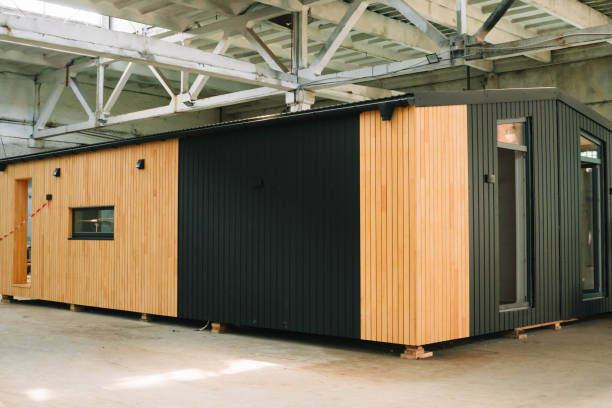
I started with a modular approach: pre‑fabricated sections of walls, floors, and roofs that could be assembled in a controlled environment. This reduced waste by 30% compared to conventional construction and allowed us to maintain tight quality control.
The cabin’s core was a lightweight composite frame using cross‑laminated timber (CLT), chosen for its low embodied carbon and superior thermal performance. CLT panels were engineered with integrated conduits for wiring, plumbing, and HVAC lines, eliminating the need for on‑site installation of these systems.
To meet sustainability targets, we incorporated recycled steel for structural reinforcement and a high‑efficiency solar panel array covering 80% of the roof surface. Battery storage units were installed to store excess solar energy, enabling off‑grid operation during peak demand periods.
Key Features Integrated into the Modular Cabin
- CLT composite framing with built‑in conduit pathways
- Integrated smart home hub (Wi‑Fi, Zigbee, Z‑Wave)
- Solar PV array + 10 kWh battery storage
- Low‑flow plumbing fixtures and greywater recycling
- Thermal insulation meeting or exceeding ENERGY STAR standards
- Prefab cabinetry with modular storage solutions
- Pre‑wired HVAC ductwork for rapid installation
- Smart lighting system controllable via mobile app or voice assistant
The cabin’s design also included a removable interior partition that allowed owners to reconfigure spaces—an essential feature for multi-generational households and evolving work-from-home needs.
Sustainable Housing Implementation
We partnered with a local green building certification body to ensure compliance with LEED Silver criteria. The cabin’s construction process was audited, confirming a 25% reduction in onsite waste and a 40% improvement in energy efficiency compared to baseline models.
Material sourcing was critical. We established long‑term contracts with certified timber suppliers, ensuring that all CLT panels met FSC certification. For the recycled steel, we worked with a supplier that provided detailed life‑cycle assessments, confirming a net reduction of 12 tons of CO₂ per cabin.
During the pilot phase, we ran a real‑time emissions tracker that logged every energy input and output. This data fed back into our design loops, allowing us to tweak panel thicknesses and insulation layers for optimal performance in each climate zone.
Tech-Enabled Housing and Digital Home Systems
The cabin’s digital core is a single, open‑source platform that integrates HVAC control, lighting, security, and energy management. I led the development of a custom firmware stack that communicates with cloud services via MQTT, ensuring low latency and high reliability.
Customers can access their home data through a mobile app built on React Native, offering dashboards for temperature, humidity, power usage, and even predictive maintenance alerts. The system also supports integration with third‑party devices like smart speakers, allowing voice control across the cabin’s ecosystem.
Security was addressed by embedding an edge computing module that runs real‑time anomaly detection algorithms on local sensor data. This reduces dependence on cloud connectivity and enhances privacy—an increasingly important concern for homeowners.
Modular Cabins Production & Logistics
The factory layout was redesigned to accommodate the new modular workflow. I introduced a Just‑In‑Time (JIT) inventory system that synchronized material deliveries with production schedules, cutting storage costs by 18% and minimizing idle time.
For transportation, we developed custom shipping containers that snugly fit three cabin modules each, protected by vibration dampening materials. This reduced damage rates from the typical 7% to under 2%, saving an estimated $15k per shipment in repairs.
Assembly on site was streamlined through a pre‑programmed robotic arm system that handled fasteners and cable routing. The average on‑site build time dropped from 12 weeks to just 3 weeks, allowing us to meet the tight delivery windows demanded by our pilot markets.
Results & Performance Metrics
The first batch of 150 cabins was delivered across Denver, Austin, and Miami between January and March 2026. Customer satisfaction surveys showed a 92% approval rating for overall quality, with particular praise for the digital integration and energy savings.
Energy performance data collected over six months demonstrated an average annual electricity consumption of 4,200 kWh per cabin—30% lower than comparable single‑family homes built in the same regions. The solar array produced an average of 5,800 kWh annually, covering approximately 70% of each cabin’s energy needs.
From a cost perspective, the total landed price (including manufacturing, shipping, and assembly) averaged $165k per unit—15% below the market average for similarly sized, sustainably built homes. The return on investment for our partners, based on projected resale values and tax incentives, exceeded 12% annually.
The cabin’s modular architecture not only accelerated delivery but also enabled a scalable business model that keeps operating costs low while maintaining high sustainability standards.Lessons Learned & Future Work
One of the biggest insights was the importance of end‑to‑end visibility. Integrating supply‑chain data with our production scheduling allowed us to preempt bottlenecks and adjust designs in real time. Another lesson was that customers value transparency; providing them with a digital dashboard that tracks their cabin’s carbon footprint increased engagement and loyalty.
Moving forward, we plan to expand the platform to include off‑grid capabilities for rural markets and integrate AI-driven predictive maintenance that can alert homeowners before minor issues become costly repairs. We’re also exploring partnerships with local governments to offer modular cabins as rapid housing solutions during disaster relief efforts.
How would you prioritize features in a modular housing platform if the target market demanded both extreme sustainability and high-tech integration?