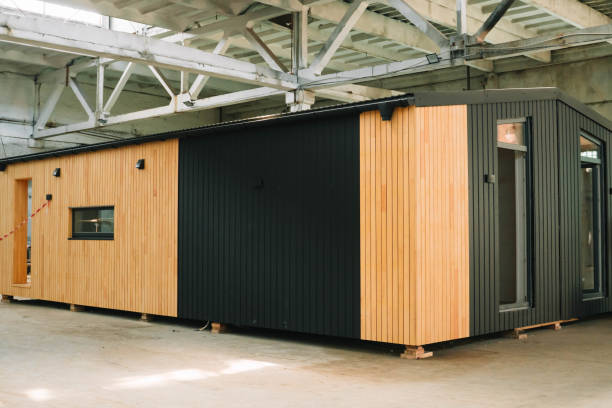
Bricks, Sticks, and A Whole Lot of Tricks: My Take on Revolutionizing Remote Housing

Okay, pull up a chair. Let's talk about housing—no, not the snooze-fest of cookie-cutter developments, but the cool stuff. I'm diving deep into solutions for remote areas, prefab passive houses, and why sustainable housing isn't just for the eco-warriors. And yeah, we'll touch on disaster relief housing too because, let’s face it, Mother Nature hasn’t exactly been chilling lately.
Why Remote Housing Needs a Makeover
I’ve seen enough poorly thought-out remote housing projects to last me a lifetime. It’s like, do we really need another concrete block dropped in the middle of nowhere? So here's the dish: I'm all about integrating tech and sustainability to create homes that not only make sense but make you go, “Wow, that's clever!”
Having dabbled in the tech and design realm for ages, I've seen firsthand how innovative housing can change lives. I mean, who thought you could click a few buttons and have a house pop up that’s both eco-friendly and looks like it belongs on Mars?
Passive House Prefabs: Not Your Grandma’s Trailer
Alright, hear me out: prefab homes have gotten a bad rap. But toss in some passive house principles, and you’ve got a recipe for low-energy living that can brave any climate. Think igloo, but stylish and without the ice.
And yes, as a guy who’s spent more time with screwdrivers and software than I care to admit, I can vouch that the modern-day prefab is smarter, sleeker, and more sustainable. It's like the smartphone of houses!
What’s Cooking in Sustainable Housing?
When I say sustainable, I’m not just throwing around buzzwords here. Sustainable housing is all about materials that scream, “I'll biodegrade, but not before I give you a solid century of shelter!” It's about homes that blend into the environment faster than a chameleon at a disco.
From bamboo bones to insulation made from mushrooms—yes, mushrooms—sustainable housing could give any tech startup a run for its money in the innovation department.
Must-Haves for Disaster Relief Housing
- Speedy setup - because disasters don’t RSVP.
- Weather resilience - think Fort Knox but for storms.
- Modularity - because one size does NOT fit all in crisis.
- Cost-effectiveness - saving wallets and worlds alike.
- Local material use - shipping bricks across oceans? No thanks.
- Community input - nothing built FOR a community should be built WITHOUT a community.
- Flexibility - today’s relief shelter, tomorrow’s community center.
- Green technology - let’s keep the planet green while wearing hard hats.
Now, if that checklist doesn’t scream ‘next-level innovation,’ I don’t know what will.
Here’s the twist: it’s not just about building houses; it’s about building futures. And guess what? We're doing it with style.From My Toolbox to The Field
In my experience, the joy of creating something that stands the test of time and elements is unmatched. I’ve been elbows deep in projects that aimed to revolutionize how we think about living spaces. And you know what? It's working. Whether it’s whipping up a disaster-resistant module or fine-tuning the energy efficiency of a prefab unit, I’m there, blending my tech know-how with a hearty dose of real-world pragmatism.
Join the Conversation
So, what’s your take? Ever thought about living in a house that could be set up in a day and stand strong against a hurricane? Or maybe you’ve got some wild ideas about sustainable materials? Drop your thoughts and let’s kick around some ideas. Who knows, the next big housing innovation might just start with our chat.
Ready to brainstorm or just curious? Let’s hear it!